Taman Sari offers travelers a fascinating look at Yogyakarta’s royal past. The historic complex combines pools, gates, gardens, passages, and distinctive architecture. This Taman Sari History Guide explains its origins, royal functions, important structures, and cultural value. The site also gives visitors a deeper understanding of the Yogyakarta Sultanate.
Discover the Origins of Taman Sari
Sri Sultan Hamengku Buwono I began building Taman Sari in 1758. Major parts of the complex reached completion around 1765. The Sultan created the site as part of the royal palace environment.
Name Taman Sari means “beautiful garden.” The complex originally covered more than 10 hectares. It included 57 structures, such as buildings, pools, canals, artificial lakes, bridges, and underground passages.
These features made Taman Sari much larger than the area travelers see today.
Understand Its Role in Royal Life
The royal family used Taman Sari for several purposes. They came here to rest, enjoy private activities, meditate, and spend time away from the main palace.
The complex also supported defensive and refuge functions. Its layout included water systems, hidden areas, and protected spaces.
Taman Sari therefore served more than one purpose. It combined recreation, privacy, royal life, and protection within one complex.
Explore Umbul Binangun
Umbul Binangun remains one of the most recognizable sections of Taman Sari. The area contains three main pools arranged from north to south.
The royal family once used these pools as private bathing areas. Decorative fountains and high walls create a distinctive atmosphere around the complex.
Visitors can walk around the pools and observe the architectural details. This area also provides excellent opportunities for photography.
See the Historic Gates and Buildings
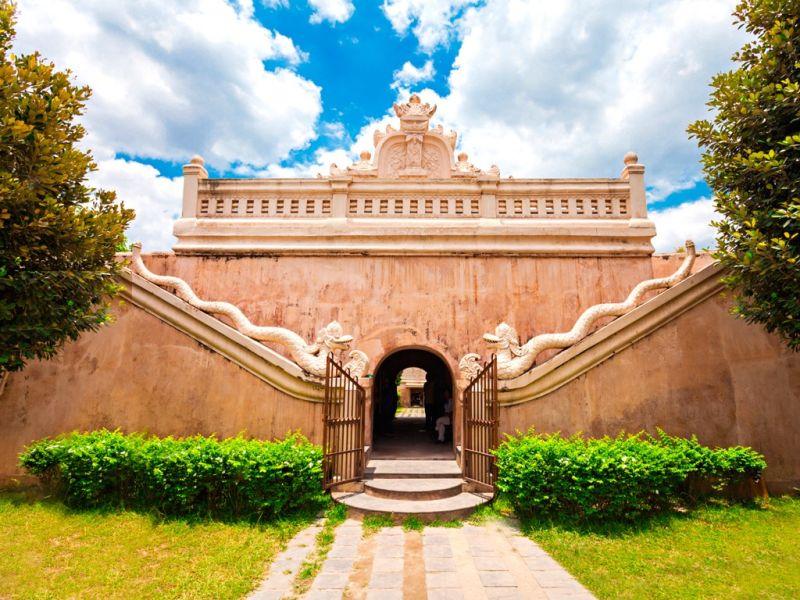
Taman Sari contains several structures that reveal its original design. Gapura Panggung welcomes visitors into part of the complex.
Gapura Agung once functioned as an important entrance. Its decorative reliefs also connect with the historical record of Taman Sari’s construction.
Other structures include Pulo Kenanga and Ledhok Sari. Each area supported different royal activities.
For broader travel planning, read this complete Yogyakarta tourism guide to culture and heritage. It can help you combine Taman Sari with other cultural landmarks.
Learn About Taman Sari’s Decline
Taman Sari changed significantly during the nineteenth century. A major earthquake struck Yogyakarta in 1867 and damaged many buildings across the complex.
After the earthquake, parts of Taman Sari deteriorated. Local residents later built homes around sections of the former royal garden.
Conservation efforts began more seriously in 1977. Restoration teams recovered and protected several surviving structures.
Today, visitors explore only part of the original complex.
Combine Taman Sari With Nearby Attractions
Taman Sari sits close to Keraton Yogyakarta. Travelers can easily visit both attractions during the same cultural tour.
Continue toward Malioboro after exploring the royal area. This route combines palace history, architecture, shopping, and local life.
Kotagede also offers another heritage experience for travelers with more time.
Plan Your Taman Sari Visit
Start in the morning if you want cooler weather and more time for nearby attractions. Wear comfortable shoes because the area requires walking.
Respect the historic buildings and follow local visitor rules. The official Keraton tourism site currently lists visiting hours from 9:00 AM to 3:00 PM.
Explore private Yogyakarta heritage tours with local guides if you want an easier way to combine Taman Sari with Keraton, temples, and other cultural attractions.
Conclusion
This Taman Sari History Guide reveals the story behind one of Yogyakarta’s most important royal landmarks. Sultan Hamengku Buwono I created a large complex for royal life, recreation, and protection. Pools, gates, passages, and surviving buildings still reflect that history. A visit to Taman Sari gives travelers a meaningful introduction to Yogyakarta’s royal heritage.